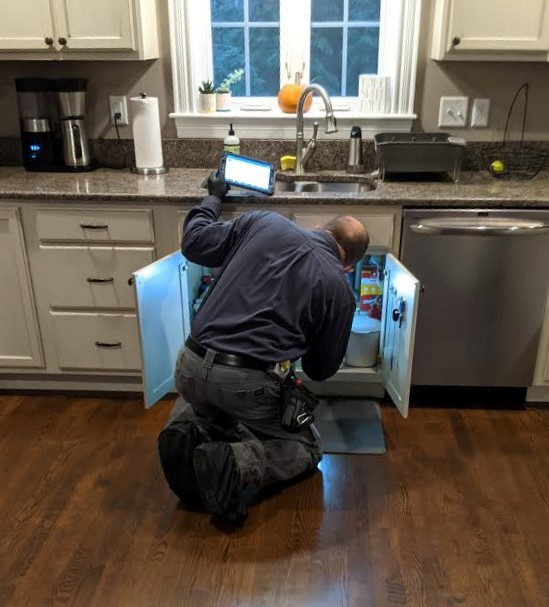
Crossroads is a Registered Maine State Radon Service Provider: Registration No. ME23700C. We provide our clients exceptional service by offering accurate, reliable and cost-effective testing within the Radon Air and Water Measurement and Home Inspection Professions. Every inspection is professionally managed by the owner and includes comprehensive communication with our clients from start to finish.
We provide personalized, quality Radon Air and Water Testing Services. All services are done in a timely and efficient manner with knowledgeable expertise.
Our location in Ellsworth places us in the center of a major crossing point for Hancock County, Acadia/Downeast and parts of neighboring counties, affording easy access for us and our clients. We also service the major towns in the greater Ellsworth area: Blue Hill, Bar Harbor, Bucksport, Castine, Deer Isle, Franklin, Hancock, Lamoine, Mount Desert, Northeast Harbor, Sorrento, Southwest Harbor, Stonington, Sullivan, Surry, Tremont, and Trenton, etc.
We hope our website will help answer a few basic questions about us as well as the issues related to radon.
Contact us today to discuss your current or future inspection needs, to schedule an appointment, to receive a quote, or if you have any questions. We look forward to working with you.
Crossroads Home Inspections, LLC was founded by Joseph Titka, a dedicated professional and craftsman with in-depth knowledge of the radon, construction, real estate and lodging trades.
Joe has been involved in the construction industry since 1978. He has worked with dedicated professionals, including architects and engineers, who have also shared a commitment to providing superior service, quality and attention to detail. Joe developed supervisory and hands-on experience with the following: W.J. Barney (renovations at the World Trade Center); NICO Construction Company (total renovation of Bankers Trust Plaza); Turner Construction (construction of the new Museum of Modern Art and the Museum Tower); H.L. Fischer, Inc. (renovations and up-grades at the New York Times Building); and Alexander Wolf & Sons, division of AW&S Construction Company, Inc. (renovations at both the Waldorf Astoria and the Empire State Building).
During this time, he also gained valuable real estate experience as a Licensed New York Realtor: NYS Bureau of Educational Standards, Division of Licensing Services for Real Estate Professionals.
Joe went on to establish the first of two lodging businesses and is also a former member of the Planning Board and Warrant Committees for the Town of Southwest Harbor. Responsibilities included start-up and lodging operations; such as, preparing for bank financing, renovation, set-up costs, income and expense projections, business plan, designing the property, extensive building renovations, understanding government issues, zoning, and licensing. Also business structure considerations including room needs and presentation, exterior presentation, pricing rooms, establishing policies and procedures, reservations, guest services, marketing and web presence.
In 2007, he sold and retired from the lodging business and founded Crossroads Home Inspections. He continued pursuing the academic requirements, field training and certification (OLCC0609) within the home inspection profession, Kaplan ITA, and is Maine State Registered to perform radon measurement in both air and water. As a Radon Gas Measurement Technician, Joe was educated, trained and prepared for national and state radon measurement (ME23700C) in the science and business of radon, including measurement and indoor air quality; EPA, Eastern Regional Radon Training Center, Rutgers University.
Crossroads continues educational programs as well as communication with Maine's DHHS, Radon Department, to help offer our clients knowledgeable and up-to-date guidance and to ensure that our clients needs are met in the most reliable, timely and cost-effective manner possible.
Christine Titka is the Office Manager for Crossroads and is the pleasant voice you hear when you call our office. She has over 26 years of business experience that includes professional management and supervisory responsibilities as well as owning her own business. She is educated in office information systems, accounting, marketing, business communications, and telecommunications. Her education and past employment positions lend well to the support she provides Crossroads and to our clients.
While working in Manhattan for Executive Enterprises, Inc., duties were to ensure that the production and operation of all programs ran smoothly and efficiently by managing Program Assistants; assisted President and Vice President in coordinating with various private institutions and government agencies in the development of education curriculum. Chris was responsible for the design and development of promotional literature; interacted daily with top government officials, corporate officers and law and accounting partners; assisted in the planning, development and implementation of training workshops; and had direct contact with corporate hotels. After marrying Joe in 1989, she moved out of New York City to hold the position of Office Manager, and Administrative Assistant to the Owners, of The Saunders Company in Rye, New York. Saunders was a commercial real estate firm specializing in upscale retail. During this time, she also became a licensed New York Realtor.
In 1993, Chris moved to Maine with her husband to establish the first of two successful lodging businesses. In 2007, they sold and retired from the lodging industry. Later Chris became a team member of Crossroads Home Inspections.
Lucy, an English Springer-Spaniel, joined our team as a pup in 2009. From her first interview, Lucy showed that she had a nose for inspections. Lucy grew into her position as part of the home inspection team and was later promoted to the radon team where she is her boss's co-pilot on the road. Lucy prefers a relaxed environment in the office. While in the office, Lucy is busy with Kongs and puzzle toys. She has also demonstrated an impressive range of vocals, and from time to time, you may hear her chime in as an advisor. Lucy unwinds from her workday by taking naps. During her off time, she is an avid outdoor enthusiast. Crossroads is proud to have her as a partner.
Crossroads is dedicated to representing only our clients and will always act in good faith with the highest degree of integrity, courtesy and expertise. We seek to provide knowledgeable, accurate, reliable and cost-effective radon air and water testing services that build relationships based on trust and service.
We avoid conflicts of interest by making radon and home inspections our only business; therefore, inspections will not be used to solicit work in another field. We also do not install radon mitigation systems, nor do we provide any other corrective services. This is to assure that radon testing and analytical services are not biased by a conflict of interest. We will only accept compensation for our services from our clients.
Most importantly, each team member is committed to meeting our clients needs while exceeding expectations; and, as always, in a good natured and professional manner.
Crossroads offers a free informational presentation on the basic truths about radon to real estate firms, homeowner associations and other organizations in the area. The power point presentation is visually designed to provide an educational overview as well as clear and accurate information about radon. Questions are also welcome during the presentation.
To schedule a presentation, please contact our office.
SUMMER CALENDAR
June 22, 2010 - Rotary Club of Ellsworth at 6:00 PM
July 15, 2010 - Noontime Rotary of Ellsworth at 12:00 PM
The Radon Team
RADON GAS: Is a radioactive gas and is created by the decay of Uranium in the soil. Uranium 238 decays in stages. Each stage results in the creation of a new substance. Radon 222 is the only form emitted as a gas.
Radon gas occurs naturally in Maine soil and water and moves up into a house from the ground. Warm air rises thru the structure creating a vacuum. This negative pressure draws soil gases and moisture from the ground underneath. This also takes place when the wind blows or the barometric pressure or temperature changes. Radon gas can also dissolve into well water, which is then released into the air when you use the water. It is harmlessly dispersed in outdoor air, but when trapped in buildings exposure to high levels can cause damage to lungs and a risk of cancer.
Since radon is colorless, tasteless and odorless, only testing determines if the levels in your home are elevated, and special equipment is needed to detect it. This is why it is a good idea to order radon testing with a home inspection. Air and well water tests can show whether home radon levels meet state safety guidelines. If test numbers are higher than state and national safety guidelines, treatment systems can be installed.
SUNLIGHT:
Ionizing radiation damages DNA in living cells. Just one mutant cell can cause cancer.
Like sunlight, Radon decay offers a full menu of ionizing radiation.
RADON DECAY: As radon atoms undergo radioactive decay, they disintegrate into ionizing radiation and radon progeny known as "daughters (solid heavy metal particles of lead, polonium and bismuth). Like sunlight, radon's ionizing radiation is released as:
ALPHA PARTICLES: Because of its mass, it will not penetrate healthy skin. However, if inhaled, can cause cancers in lungs or other organs.
BETA PARTICLES: Because they are energetic and have no rest mass, they can be more of a health threat than Alpha. Beta may penetrate 1-2 cm of human flesh
GAMMA RADIATION: Closely related to X-Rays but more energetic. Gamma rays are pure energy transmitted in a wave without the movement of matter and readily pass through the body.
Radon progeny include 4 isotopes with half-lives of fewer than 30 minutes. These are the major source of human exposure to Alpha radiation. Radon gas decays into minute solid particles, which lodge in the lungs and emit radiation for over 20 years. Ionizing radiation damages the DNA in living cells, causing cancerous and genetic mutations.
GEORGRAPHIC FACTORS: Because Maine is part of a geographic region relatively high in natural Uranium-238, its rocks and soils create more radon than most other States. Areas most likely to have elevated levels are those with significant deposits of granite, uranium, shale, and phosphate. These are all high in radium content; therefore, sources of radon gas. Rock and soil permeability is also recognized as a key factor influencing radon availability at the surface, even in low uranium containing rock types, such as limestone. The amount of radon emanating from the earth and concentrating inside homes varies considerably by region and locality, and is greatly affected by the residential structure as well as soil and atmospheric conditions.
Other factors that pre-dispose homes to elevated levels of radon include soil porosity, foundation type, location, building materials used, entry points for soil gas, building ventilation rates, and source of water supply. However, due to the many determinants of indoor radon levels, these factors and local geology alone is an inadequate predictor of risk.
Testing is the only way to determine indoor radon concentration.
RADON MOVEMENT: Warm air rises thru the structure creating a vacuum.
This negative pressure draws soil gases and moisture from the ground underneath.
This also takes place when the wind blows or the barometric pressure or temperature changes.
"Cancer" is the general term for a group of diseases that occur when there is damage to DNA resulting in an uncontrolled growth of abnormal cells. These cells can metastasize by growing directly into nearby tissues and organs or by spreading through the circulatory or lymphatic systems. Most types of cancers are named after the part of the body where it originated and that is why lung cancer deaths induced by radon, or say asbestos or smoking, is listed on a death certificate as Lung Cancer.
EXPOSURE RISKS: Risk of radon exposure is related not only to its average level in the home, but also to the occupants and their lifestyle. Factors influencing the risk of cancer from radon exposure are:
AGE AND DURATION OF EXPOSURE
TIME SINCE INITIATION OF EXPOSURE
FORMER OR ACTIVE SMOKER OR OTHER CARCINOGENIC EXPOSURES
PHYSICAL CONDITION SUCH AS A PRE-EXISTING RESPIRATORY CONDITION
A COMPROMISED IMMUNE SYSTEM
GENETIC TENDENCY AND/OR GEOGRAPHIC LOCATION
IARC AND NTP CARCINOGEN LIST
Radon is in Category 1: Sufficient Evidence. Radon is a Confirmed Human Carcinogen.
INGESTION EXPOSURE:
Risk of developing cancer from ingestion is smaller than the risk of developing lung cancer from radon released to air. However, drinking water containing radon still presents a risk of developing internal organ cancers, primarily stomach cancer, due to charged particles attaching to the stomach lining. Any uncharged particles are free to pass through and enter the blood stream as well as being exhaled.
CANCER SURVIVORS AGAINST RADON: "Creating an advocacy group can be difficult when 85% of the victims die within 4-5 years of being diagnosed."
For more info on radon awareness and action: www.cansar.org
RESPIRATORY EFFECTS: The small bursts of energy released from particles trapped in the lungs are like being exposed to hundreds of chest X-Rays every year. Example: Living in a home with 10 pCi/l is equal to receiving 250 chest X-Rays a year. Other harmful respiratory effects associated with chronic exposure to radon include:
EMPHYSEMA
PULMONARY FIBROSIS
CHRONIC INTERSTITIAL PNEUMONIA
SILICOSIS
RESPIRATORY LESIONS
Source: Environmental Health Sciences; University of MN. One of the oldest and most highly ranked in the country on scientific, technological, environmental and occupational health concerns.
INHALATION EXPOSURE: As the most significant route of exposure, there is no controversy about the connection between radon and lung cancer. As radon decays in the lungs, the Alpha particle causes a microscopic burn on lung cells damaging the cells DNA bonds. If the damaged cell replicates, the new defective cell is more receptive to invasion by carcinogens than a healthy lung cell; and therefore, cause cancerous changes in nearby cells. After radon gas is inhaled, it readily dissolves in the blood and circulates through the body, organs and tissues until it is again exhaled through the lungs or skin. The problem is not so much radon gas, but rather the radioactive particles it produces. As radon atoms undergo radioactive decay, they disintegrate into radiation and radon progeny known as "daughters". These minute, electrically charged, chemically active particles float in the air. When breathed in, some get trapped in the airways.
Radon exposure does not produce immediate symptoms. You may not realize you are being exposed to dangerous levels of radon until you, or someone in your family, is diagnosed with lung cancer. Since the lungs are connected to other organs by blood vessels, there is a danger of the cancer spreading.
BLOOD STREAM: In addition to the gas, 1/3 of inhaled radon decay particles also passes through the lungs into the blood stream and then gets trapped. Scientists believe that radon, dissolved in blood, may cause additional diseases besides lung cancer.
Radon gas is also soluble in lipids and accumulates in lipid tissue throughout the body. Highest concentrations are in the brain, bone marrow and nervous system. However, none of its heavy metal daughters are soluble in the lipids, and consequently, remain trapped in the brain and bones. This is where it continues to emit Gamma Radiation and Alpha Particles. Studies indicate that radon also causes leukemia. University of North Dakota Researchers discovered that the presence of radioactive radon "daughters" in the brains of non-smoking persons with Alzheimers and Parkinsons were 10 times greater than in the brains of persons with no previous evidence of neurological disorders. Interestingly, the geographic distribution of Parkinson's mortality is considerably higher in states with greater radon potential.
TERATOGENIC EFFECTS CAUSED BY RADON EXPOSURE (Source Environmental Health Sciences):
TERATOGEN: ANY AGENT THAT CAN DISTURB THE DEVELOPMENT OF AN EMBRYO OR FETUS.
Alpha particle exposure through early life stages may have profound effects on the health and survivability of an embryo or fetus. If dissolved in a mother's blood stream, in the uncharged phase, radon can pass through the placenta and into the developing child. If the developing child is in the embryo phase and a radon particle forms a progeny and deposits anywhere, emitting alpha radiation, the formation of DNA lesions will most likely be fatal. If in the fetal stages, most of the bodily development has already occurred. In this case, a radon particle passing into the fetus would likely move to lipid portions, namely the brain and other organs. Since brain development is crucial in this phase, ionizing radiation at this point might not be fatal but may cause severe inhibition in brain development, leading to mental retardation after birth. Exposure of radon after the 1st year of birth follows the same pathways as adults. However, exposure to children means they have a much longer time than adults to allow for the progression of DNA lesions to form their toxic end-points.
WHY TEST: KNOW YOUR EXPOSURE
SELLING: Know your radon levels up front and show the buyer a credible radon measurement report.
BUYING: Know the radon levels before you buy. As with other aspects of a real estate transaction, different options of a radon mitigation system may be negotiated.
NEVER TESTED: For your safety, Maine DHHS, EPA, Congress, etc. recommend Radon Air and Water tests to know your familys exposure level.
MITIGATED: To obtain independent verification of the radon level after a mitigation system was installed or to ensure continued effectiveness of the system.
RENOVATED: Test if you've renovated or added on to your home, changed your furnace or ventilation system.
CHARCOAL TEST KIT DISADVANTAGES - ANY OF THESE CONDITIONS COULD LEAD TO UNNECESSARY MITIGATION: The laboratory makes an error; The radon kits get lost in the mail; The owner unintentionally interferes with the test; The owner intentionally tampers with the test; The radon kits get over exposed.
They cannot provide documentation with hourly readings nor supply any important environmental data during the test period. Since radon is a living, radioactive particle with a 3.8 day half life, the accuracy is heavily dependent on the time elapsed between conclusion of the test and the analysis. They are time integrating and sampling errors tend to be high since they are susceptible to:
1) HUMIDITY 2) AIR MOVEMENT 3) TEMPERATURE 4) WIND CHANGES, etc.
The analyzing lab will assume a standard percent relative humidity, and use it in their calculations, so any deviation over or under this standard will cause the results to be biased. Waiting Period: After the testing period, you must wait again for the results. Samples must be mailed to a lab, analyzed and then results are mailed back. Therefore, not ideal for Real Estate Transactions.
CONTINOUS RADON MONITORS:
Crossroads uses the more sophisticated Sun Nuclear Professional 1029 Continuous Radon Monitor, an electronic detection device used for the measurement of radon gas with tamper resistant analysis. This device samples air quality every hour and results can be obtained in as little as 48 hours.
No waiting for: MAILED SAMPLES, OUTSIDE LAB ANALYSIS OR RESULTS.
The 1029 unit also raises the bar in continuous radon gas measurement and is specifically designed to deter and detect test interference. The CRM will record any unusual or abnormal swings in the: RADON LEVEL, BAROMETRIC PRESSURE, RELATIVE HUMIDITY, TEMPERATURE, MOVEMENT, etc.
Offering a more accurate and reliable test result, CRMs are ideal for testing in real estate transactions.
RADON REPORT:
Your radon report will have all the collected documentation, in one location, that can be stored away for future reference. Documentation will include: Initial certified radon report with hourly readings of radon levels; temperature; barometric pressure; relative humidity; an easy to understand graph; the EPA average radon level during the test period; authorization form; test set-up sheet; and photographs of test location.
RADON TESTING WITH HOME INSPECTION: When we are performing a home inspection, and radon testing is requested, we prefer to deploy our equipment in advance. Since testing requires a minimum of 48 hours, this allows us to pick up the CRM when we do the home inspection and to provide the radon test results with your home inspection report.
A radon mitigation system reduces the average radon level found in homes to an acceptable or comfort level by various methods. The current action level for radon in air set by the State of Maine is 2 pCi/L. High levels of radon in water can be reduced greatly with present technology eliminating the increased radon in air contribution from water use. Radon in air can be lowered by active soil depressurization or ventilation methods which either mixes higher radon levels with lower levels or forces radon out by increasing interior building pressurization. There are various cost, maintenance and energy impacts to evaluate before deciding on a final solution.
We do not install mitigation systems. This is to assure that testing and analytical services are not biased by a conflict of interest. If needed, we'll supply a list of certified radon mitigators that can assist you.
LD 943 Fact Sheet (Public Law Chapter 278)
LD 943, An Act To Reduce Lung Cancer Rates in Maine, was signed by Governor Baldacci on June 8. This new law, which requires radon testing in all residential rental properties by the year 2012, will take effect 90 days following adjournment of the 124th Legislature, First Regular Session.
Specific details of the new law are:
•Radon tests required under this law must be conducted by a person registered with DHHS to conduct radon tests pursuant to Title 22, chapter 165 (the Maine Radon Registration Act).
•The landlord or lessor of a residential rental property must provide written notice about radon and the results of the required radon testing to each tenant or potential tenant.
•The Department will develop a disclosure statement for landlords or lessors to give to each tenant, which informs the tenant about radon and its risks. This form must be posted on the Departments radon website.
•The tenant will have to sign an acknowledgment that they have received this disclosure.
•When radon test results show 4 pCi/l or higher radon levels, the landlord or lessor must mitigate those levels within six months, or within six months of obtaining local permits if required in their community.
•Mitigation must be conducted by a person registered with DHHS to conduct radon mitigation pursuant to Title 22, chapter 165 (the Maine Radon Registration Act).
•After mitigation has been successful, the landlord or lessor must provide notice of this to tenants.
The new law also modifies Title 22, chapter 165 to require addresses of all structures that are tested or mitigated for radon must be reported to the Department in addition to the other information already required to be reported for each radon test or radon mitigation. This will allow the Department to develop a database to help track which residential rental properties have been tested as required under this new law.
Landlord Tenant Law in Maine
Maine Revised Statutes
Chapter 710: RENTAL PROPERTY
§6030-D. Radon Testing
Testing. By 2012 and every 10 years thereafter, a landlord or other lessor of a residential building shall have the air of the residential building tested for the presence of radon. A test required to be performed under this section must be conducted by a person registered with the Department of Health and Human Services pursuant to Title 22, chapter 165.
[ 2009, c. 278, §1 (NEW) .]
DISCLAIMER
The publications of the Maine State Legislature are made available on the Internet as a public service and reliance on any such information is at the users own risk. The State of Maine, its agencies, officers and employees do not warrant the accuracy, reliability, completeness or timeliness of any information on the Maine State Legislatures web site and may not be held liable for any losses caused by any persons reliance on the information available on this web site. Please note that the Office of the Revisor of Statutes does not provide legal advice regarding the interpretation of the laws of Maine, nor do we provide legal research.
Notification. A landlord or other lessor of a residential building shall provide written notice to a tenant or potential tenant regarding the presence of radon in the building, including the date and results of the most recent test conducted under subsection 1, and the risk associated with radon. The department shall prepare a standard disclosure statement form for landlords and other lessors of real property to use to disclose to a tenant or potential tenant information concerning radon. The form must include an acknowledgment that the tenant or potential tenant has received the disclosure statement required by this subsection. The department shall post and maintain the forms required by this subsection on its publicly accessible website in a format that is easily downloaded. [ 2009, c. 278, §1 (NEW) .]
Mitigation. When the test of a residential building under subsection 1 reveals a level of radon of 4.0 picocuries per liter of air or above, the landlord or other lessor of that building shall, within 6 months, mitigate the level of radon in the residential building until it is reduced to a level below 4.0 picocuries per liter of air. If a landlord or other lessor of a residential building is required to obtain a permit under a local or municipal ordinance, mitigation must occur within 6 months after obtaining any necessary permit. Mitigation services must be provided by a person registered with the Department of Health and Human Services pursuant to Title 22, chapter 165. After mitigation has been performed pursuant to this subsection to reduce the level of radon, the landlord or other lessor of the residential building shall provide written notice to tenants that radon levels have been mitigated. [ 2009, c. 278, §1 (NEW) .]
Penalty. A person who violates this section commits a civil violation for which a fine of not more than $250 per violation may be assessed.
SECTION HISTORY
2009, c. 278, §1 (NEW).
A realtor who knows the basic truths about radon can provide clear and accurate information, calm any concerns about radon, and keep a sale on track. The solution to effectively deal with any radon issue and keep it from interfering with your primary source of revenue is information. Treat it as routine, testing for radon should be approached the same as testing for water quality. If an elevated level is found, you can guide both buyer and seller smoothly through the process of negotiation and mitigation as you would with any other needed repairs. Just as a leaky roof or a cracked window can be repaired, a radon reduction system can be installed to reduce radon levels.
If selling a house with an already installed mitigation system, it is usually a marketing plus. Mitigation systems have been shown to offer additional benefits beyond reducing radon. It also prevents damp soil air from entering the house, resulting in a noticeably drier basement. This reduces musty odors and helps minimize the growth of mold and mildew that can also jeopardize health and well being.
Whether representing the buyer or the seller, Realtors can best serve clients by being informed. You can accurately answer questions and avoid potential liability by learning more about radon. Crossroads is available to address any questions you may have. We also offer informational presentations where we provide relevant and up to date information on issues relating to radon, health risks, testing, results interpretation, and mitigation.
For more information or to schedule a presentation, please contact our office.
Most buyers will have a home inspection along with a water quality test. They are also testing for radon to determine their family's risk of exposure.
If a house was tested for radon previously, the buyer should ask for test results. Sellers should disclose results and evidence of any mitigation or treatment. If results are more than two years old or was not performed and documented by a State Registered Technician, new tests should be done. Issues to be considered include: What area of the home was tested, were proper test conditions maintained, were there any major remodeling or structural changes, changes made to the heating, ventilation or air condition systems; and if a radon well water sample was collected, was it collected and tested separately from a water quality test.
If a home has not been tested for radon, or past testing is unacceptable, the buyer may request to have testing done separately or as part of a home inspection. If so, buyers need to include a radon contingency clause within their purchase agreement and be specific to an acceptable level of radon.
If the results are above the recommended State action level, and mitigation is recommended, buyers now have an opportunity to negotiate with sellers before closing. As with other aspects of a real estate transaction, discussing mitigation is no different than discussing leaky roofs, broken stairs or cracked windows.
THE MAINE RADON REGISTRATION ACT: Requires radon testing, if the house is for sale, to be done by a State Registered Radon Technician for Both Air & Water. Assuring that an impartial expert does the job and all protocols were met.
Real estate transactions may involve a home inspection and testing; such as, moisture, water quality, septic system, lead paint, radon, mold and any other concerns.
If considering putting your home up for sale and would like to test for radon, it is advisable to use a Maine Registered Radon Technician. The Radon Technician and his report will enable you to show a potential buyer that the results are valid, documented and that all necessary EPA and State protocols were, indeed, followed.
If a Seller already has a mitigation system, it is usually a marketing plus, especially because of the added benefits toward indoor air quality above and beyond radon reduction.
If a home was tested for radon previously but the results are more than two years old, or was not performed and documented by a State Registered Technician, the buyer may request a new test. Other issues the buyer will consider include: What area of the home was tested, were proper test conditions maintained, were there any major remodeling or structural changes, changes made to the heating, ventilation or air condition systems; and if a radon well water sample was collected, was it collected and tested separately from a water quality test.
If a home has not been tested for radon, or past testing is unacceptable, the buyer may request to have testing done separately or as part of a home inspection. In either case, if the results are above the recommended State action level, and mitigation is recommended, all parties involved will have the opportunity to discuss the issue. This is no different than discussing leaky roofs, broken stairs or cracked windows.
Home Buyers and Sellers
Guide to Radon
Citizens Guide to Radon
Consumers Guide
to Radon Reduction
Crossroads Home Inspections llc
for home inspections, please visit:
www.CrossroadsHomeInspections.com
email: crossroads_roadrunner.com
contact us today
207-610-1440
128 pioneer farm way; ellsworth, ME 04605